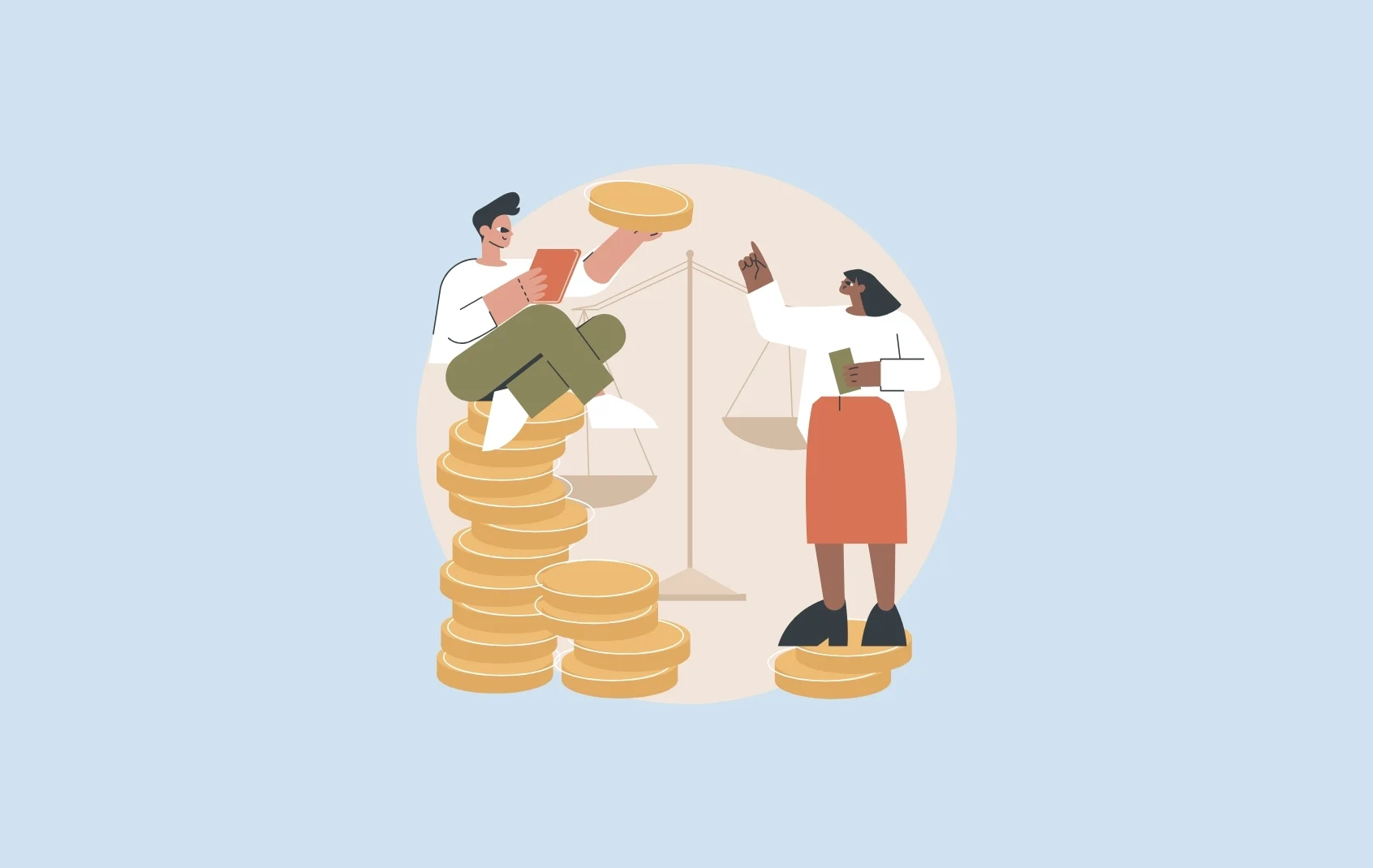
Discrimination in the workplace is not limited to occasional incidents – it is everyday reality for many women who, despite their skills and achievements, constantly have to prove their worth. In male-dominated industries they often encounter invisible barriers and hidden mechanisms that slowly undermine their self-confidence and raise doubts about their own competences. The belief that a woman "isn't fit" for certain tasks is sometimes not stated outright, but manifests itself in decisions that systematically overlook their achievements and block their development.
This article offers a glimpse into the reality many women live in – their stories, feelings and strategies for coping with exclusion. It is the voice of those whose work becomes a daily fight for fair treatment, and whose workplace becomes a battlefield for recognition. Are these isolated cases, or symptoms of a deeper problem affecting thousands of people? We invite you to read on and reflect on how often everyday professional reality can look completely different depending on whether someone is a man or a woman.
The protagonist's name has been changed to preserve anonymity.
Gender discrimination "A woman isn't fit for managerial positions"
Karolina works as an analyst at one of the largest banks in the country, where she is one of the few women in a senior position in a male-dominated team. Every day she faces not only professional challenges, but also prejudices that keep resurfacing in her interactions with colleagues and superiors. Although her results are excellent and her achievements have been recognised many times, she still feels she has to prove her worth more than her male colleagues. Karolina's daily life is a constant fight for equal treatment in a workplace that is not always ready for change.
Could you tell us about your experiences of gender discrimination at work?
"At first I thought that if I worked hard, everything would come naturally. My results spoke for me – I hit my targets, I got positive feedback, and yet over time I started to notice that my path looked different from my colleagues'. I saw how they were promoted faster, how they were considered for new projects, while all I heard was that 'my time may still come' or that 'there's no rush, you still have time to grow'. I wondered, what is it about me that's wrong? Why is it so hard for them to trust a woman in a managerial position? The sense of injustice kept growing, and I found it harder and harder to understand why I had to fight more than others."
How did it affect you when you saw you were being treated differently?
"It was very exhausting. On the one hand I felt anger that so many of us have to go through the same thing, and on the other – there were moments when I simply began to doubt myself. When you constantly hear that 'you still have time', you start to wonder whether maybe it's true. Maybe I really am missing something I can't see. In those moments I felt as if I were fighting not only the system, but also myself. It's a very personal experience, because discrimination affects how you start to see yourself. Sometimes I would just come home emotionally drained, feeling that whatever I did, it would never be enough."
Did you feel that this treatment affected your self-confidence?
"Yes, definitely. For a long time I tried to simply ignore what was happening; I thought I could handle it, that it was enough not to pay attention. But over time it gets into your head. After a few failed attempts at promotion, I started to feel that maybe I was the one doing something wrong. I stopped being sure of my decisions, I analysed every step – something I had never done before. It drains your strength, it makes you feel like someone who constantly has to prove they deserve their place, even if that place is never given to them. Instead of focusing on my work, I kept wondering whether I should change something about myself – and that was destroying me."
How did you cope with it on a daily basis?
"Initially I tried to deal with it on my own, but that's not easy. I started looking for support from other women who had been through similar things – it was a huge support, because I saw that it's not a problem that affects only me. I felt I wasn't alone, that this phenomenon affects all of us, not just one person. Today I try to look at it more broadly – to focus on my work, not to let myself be pushed to the margins. But it's still a fight that takes an enormous amount of energy."

Have you noticed differences in the way women in senior positions are treated?
"Definitely. I've seen female colleagues who had to become practically invisible or work twice as hard to earn the same respect that men get automatically. There's this belief that a woman in a managerial position has to constantly watch out not to 'overdo' assertiveness, otherwise she'll be labelled 'too ambitious' or 'emotional'. It's very exhausting, because we can't just do our thing – we are constantly being watched to see whether we really 'fit'. It's a pressure that's hard to describe – it gives you the feeling that even success can become a problem."
What do you think about the new EU rules on gender balance on management boards?
"On the one hand it's a huge step forward, but… to be honest, I wonder whether these rules will really change anything. Introducing a minimum percentage threshold may motivate companies to act, but it's not enough to change a culture that has marginalised women for years. In a sense, these rules are a kind of "forced equality" – the question is whether they will be followed by changes in mentality and a genuine readiness for equal treatment?"
Have you thought about changing industry or position?
"Honestly? Yes, more than once. There were moments when I felt this fight was too much for me and I wasn't sure whether it would be any different anywhere else. I talked about it with women who changed industries and I know some of them regret leaving. On the other hand, there are days when I think I have to stay here to change something, even if the change is slow. I'm a realist, I know I may never see big results of my fight, but if even one woman doesn't have to go through the same thing because of it, then it's worth it."
Discrimination against women in the workplace is not a matter of a few unfair comments or occasional prejudices – it is the systemic, daily undermining of their competences and value. It is a situation in which thousands of women face hidden and overt obstacles every day, forced to prove that they deserve their place more than their male colleagues. This is their reality: work that demands constant vigilance, a careful balancing act between "too little" and "too much", and ultimately – a fight they often wage alone.
Are we aware of how deeply rooted these problems are? Do we realise that passively watching injustice also makes us part of this system? It is time to stop looking away and ask ourselves: what can we do so as not to be part of the silent consent to situations in which a woman is belittled and overlooked simply because she is a woman?
Summary
Karolina's story shows that discrimination in the workplace is not just a series of incidents, but often an ongoing process that undermines self-worth and limits the professional development of many women. Although the prohibition of discrimination and the principle of equal treatment in employment are enshrined in the Polish Labour Code, in reality employees frequently encounter differential treatment on grounds of gender – not only direct discrimination, but also indirect discrimination, manifesting itself in subtle and systemic actions.
Discrimination in employment can take various forms – from ignoring achievements, through unjustified burdening with additional duties, to exclusion from promotions. Every instance of unequal treatment limits women's chances of fully realising their potential. What is discrimination, if not constantly telling employees that their value depends on characteristics unrelated to their qualifications? Observing the principles of equal treatment of employees is not merely a formal matter, but the foundation of building a workplace based on respect.
It is worth remembering that discrimination at work gives the right to fight for compensation for moral and professional losses. To prevent all forms of discrimination, companies should strive to counteract discrimination by creating clear standards of working conditions, where equal treatment in employment is the rule, not the exception. It is not just about protecting employees from injustice, but about changing the work culture into one in which every person, regardless of gender, can develop without fear of direct or indirect discrimination.
Perhaps it is time to stop accepting silence as the norm and ask ourselves what each of us can do to counteract discrimination and support equality in the workplace.


